What Does an Evidence-Based Preschool Music Curriculum Look Like?

And what does “evidence-based” actually mean at Little Kiddos Music Academy®?
I use the phrase “evidence-based” to describe Little Kiddos Music Academy® a lot. And I want to be really clear about what I mean by it—because I think the phrase gets thrown around until it stops meaning anything.
So let’s talk about it.
Let’s Define “Evidence-Based.”
When I say Little Kiddos Music is evidence-based, I am not saying that some university ran a randomized controlled trial on my curriculum and proved it makes kids smarter.
Nobody’s done that study. (Yet…that I know of!)
If anyone tells you their preschool music program has been “clinically proven,” I’d ask a few more questions.
Little Kiddos Music Academy® is designed around research-informed principles of early childhood development, music education, and how young children learn.
Little Kiddos Music Academy® is designed around research-informed principles of early childhood development, music education, and how young children learn.
Confession: I’m just as much of an education nerd as I am a music nerd. So, my two nerdy-sides are in perfect harmony (yes, a Fancy Pants Music Word!) when it comes to creating a preschool music curriculum that actually teaches REAL music to little kiddos!
The curriculum isn’t built around what’s cute, what’s easy to teach or to film, or what happens to fill 25 minutes.
It’s built around what young children are capable of learning—and how they actually learn it.
Preschoolers Can Handle Real Music. All of It.
This is the belief the whole curriculum sits on:
Young children are capable of way more musical understanding than we usually give them credit for.
Preschool music doesn’t have to mean three cute songs, some banging on random instruments, scarf-shaking, and calling it a day. (To be clear, scarf-shaking is great, and I’m a big fan. And, obviously, instrument-play is one of my passions for in early childhood music, buuuut, it must be done correctly!)
Children ages 1–6 can genuinely begin developing an understanding of:
- steady beat
- rhythm
- tempo
- dynamics
- pitch
- musical patterns
- listening
- singing
- movement
- musical vocabulary
- instrument technique
- musical form
- ensemble skills
How do I know? ‘Cuz I’ve done it for over 25 years. You just have to teach those concepts in a way that respects where children are developmentally.
I don’t water down music for little kids. It might be the hill I die on. I cringe when music teachers are still using “fast” and “slow” even with kiddos as old as 8 or 9. Why say that when even a two year old can learn what Adagio means?! It just has to be taught the right way. So, that’s what I do. I make real musical concepts accessible to them.
“Evidence-Based” Does Not Mean Sitting Still With a Worksheet
I think some people hear “evidence-based” and picture flashcards.
Or a child sitting quietly while an adult explains something at them.
That is not what quality early childhood education looks like, and it’s definitely not what’s happening in this preschool music curricula.
Developmentally appropriate practice in early childhood education emphasizes joyful, engaged, play-based learning combined with intentional teaching. Children aren’t passive recipients of information. They learn through active participation, relationships, exploration, movement, and meaningful experiences.
That’s the philosophy behind Little Kiddos Music.
Little kiddos don’t just sit and watch a lesson happen.
They sing. They move. They listen. They play instruments. They imitate patterns. They respond to cues. They repeat things. They make musical choices which, in turn, teaches them the musical concepts.
They’re mini-musicians and it matters in how they process the music lesson!
Playful? Yes.
Also very intentional.
Both things, all the time!
Music Is Doing More Than One Thing at Once
This is the super power of music, and one of my favorite parts of teaching music to little ones. A single music activity can look deceptively simple but so much is actually happening inside!
Picture a preschooler shaking an egg shaker to a steady beat. Looks basic, right?
That child is listening for the beat, coordinating what they hear with what their body does, practicing motor control, holding a pattern in memory, following a direction, responding to musical vocabulary, and practicing stopping and starting on cue.
And, importantly, they are developing an actual musical skill: keeping a steady beat.
Keeping a steady beat can help young children build important brain, social, and body skills.
That’s why I never think of music as “an extra” for little kids. It can be an incredibly integrated learning experience.
But there’s an important distinction here: The Music Is Not Just a Delivery Vehicle. The Music IS the Point.
I’m not using music to sneak in some unrelated lesson. The music is what children are learning. (Meanwhile, all these additional benefits of structured early childhood music education are also happening.) It’s just so stinkin’ magical! But back to specifically, music…
When they play rhythm sticks, they’re exploring steady beat, rhythm patterns, tempo, dynamics, coordination, listening, and musical response.
When they sing, they’re experiencing melody, pitch, phrasing, rhythm, language, breath, and expression.
When they move to music, they’re learning to connect what their ears hear with what their bodies do.
That intentionality—knowing why an activity is in the lesson, rather than simply choosing something that keeps children busy—is a huge part of what makes this preschool music curriculum evidence-informed rather than simply fun. (But, boy-oh-boy, it’s loads of fun, too!)
Repetition Isn’t a Shortcut. It’s Part of How Young Children Learn.
Little kiddos need repetition. Full stop. They also love it.
There’s an idea floating around that a good curriculum has to constantly serve up something brand new or kids will get bored and disengage. Sadly, we’re definitely living in the over-stimulation culture (more than ever!), especially when it comes to programming for young children.
But learning doesn’t happen just because something is new. (Or bright. Or loud. Or flashy.)
Children need opportunities to experience, repeat, recognize, anticipate, practice, and eventually demonstrate what they’ve learned.
That’s why my preschool music curriculum options all intentionally revisit songs, instruments, concepts, vocabulary, and routines.
A child hearing something for the fifth time isn’t “behind.”
They may be moving through an important learning sequence:
“I’ve heard this before.” → “I know what to do.” → “I recognize it.” → “I can do it.” → “I understand it.”
That’s not repetition for repetition’s sake. That’s early childhood learning at its finest!
What Does the Research Actually Say?
There is a growing body of research examining music training and different aspects of children’s development.
For example, a 2025 systematic review and meta-analysis examined the effects of music training on executive functions in preschool children ages 3–6. Across 10 studies, children who participated in music training showed significant improvements in inhibitory control, working memory, and cognitive flexibility compared with control groups. Um. Wow. (See more at The National Library of Science.)
The researchers also found that music-training sessions lasting approximately 20–30 minutes were associated with significant improvements in inhibitory control and working memory.
My preschool music lessons and video classes run approximately 25–30 minutes.
And while that wasn’t a lesson length I chose because of that study—it’s a length I arrived at from 25 years of actually teaching young children music.
Of course, it’s always a bonus when the research does, in fact, align with practical experience!
But I’m not going to tell you that 30-minute Little Kiddos Music lessons are “scientifically proven” to boost working memory.
That would be a stronger claim than the research supports.
What I can say is that the structure of this curriculum shares important characteristics with the intentional, active music training examined in that research.
Little Kiddos Music Academy® is Designed Specifically for Young Children
Developmentally appropriate practice (or DAP) is a way to design instruction that considers children’s development, interests, abilities, and context.
My preschool music lessons are made especially for how the littlest learners learn!
It uses:
- short, developmentally appropriate activities
- active participation
- movement
- repetition with progression
- real instruments
- age-appropriate vocabulary
- opportunities to respond rather than simply absorb
- high expectations paired with teaching that meets children where they are
Real music education. Taught in developmentally appropriate ways.
That’s the goal!
Why My Background Is Part of the Equation
I didn’t wake up one day and decide preschoolers needed some music activities. I studied music, I studied education methodology, and I’ll admit, I saw some preschools really struggling to deliver high quality music classes.
My Master’s in Elementary Education and endorsements in Choral and General Music sound froofy-impressive — and sure, they taught me the WHY’s. But it’s the 25+ years teaching young children music that taught me the best HOW’s.
Because here’s the thing:
Knowing that repetition supports learning is not the same as knowing how to repeat a concept without a room full of three-year-olds deciding they’re “already done” with it.
Knowing that children benefit from rhythmic experiences is not the same as knowing how to actually teach rhythm to fifteen wiggly bodies at once.
So What Does “Evidence-Based” Mean at Little Kiddos Music, Exactly?
It means:
Research-informed design.
Music education expertise.
Knowledge of child development and developmentally appropriate practice.
Intentional teaching.
Active learning.
Repetition with progression.
And JOY—because, holy majoly!—if a four-year-old isn’t engaged, none of the rest of it matters very much! (And it’s a lose-lose for everyone!)
These things aren’t in tension with each other.
They’re the same thing, working together.
I don’t want to water down music for preschoolers. I never will.
I don’t think little kids are too young for real music education.
I think they’re exactly the right age to start experiencing it meaningfully.
That doesn’t mean lecturing a three-year-old about syncopation. (Ha! As if.)
It means introducing real musical ideas through their bodies, voices, ears, and instruments—and seeing them experience the magic.
Playful. Evidence-based. Real music education.
That’s Little Kiddos Music Academy®, and that’s exactly what I built it to be.
A Note on the Research
Little Kiddos Music Academy® is built on the broader research in music education, child development, and developmentally appropriate practice. That part’s true and I’ll happily geek and nerd out about it with you any day.
Here’s the part I want to be crystal clear about: the curriculum itself hasn’t gone through a clinical trial or an independent efficacy study. Nobody’s put my preschoolers in lab coats and measured outcomes (yet). But that also paints a hilariously adorable picture.
The research informs how I build things. It does NOT mean I get to claim Little Kiddos Music Academy® has been “proven” to produce specific developmental outcomes — because that’s just not a claim I’ve earned.
In other words: the research informs what I build. It does not give me permission to claim what hasn’t been studied.
If I’ve ever given the impression otherwise — I’m sorry, truly. I love the nerdy side of education (the evidence, the research, the data — be still my heart) and I try hard to represent it honestly. Getting excited about research is not the same as overselling it, and I never want to blur that line.
Are you a preschool or daycare looking for a high-quality music curriculum that actually holds up? It’s not noise, it’s not fluff, it’s not filler — and if you’ve read this far, you already know why.
Little Kiddos Music Academy® gives teachers and directors a research-informed, developmentally appropriate music program built by someone who’s spent 25+ years in the actual classroom, not just the literature. If you’re evaluating curriculum for your center, REACH OUT! — I’d love to talk shop.
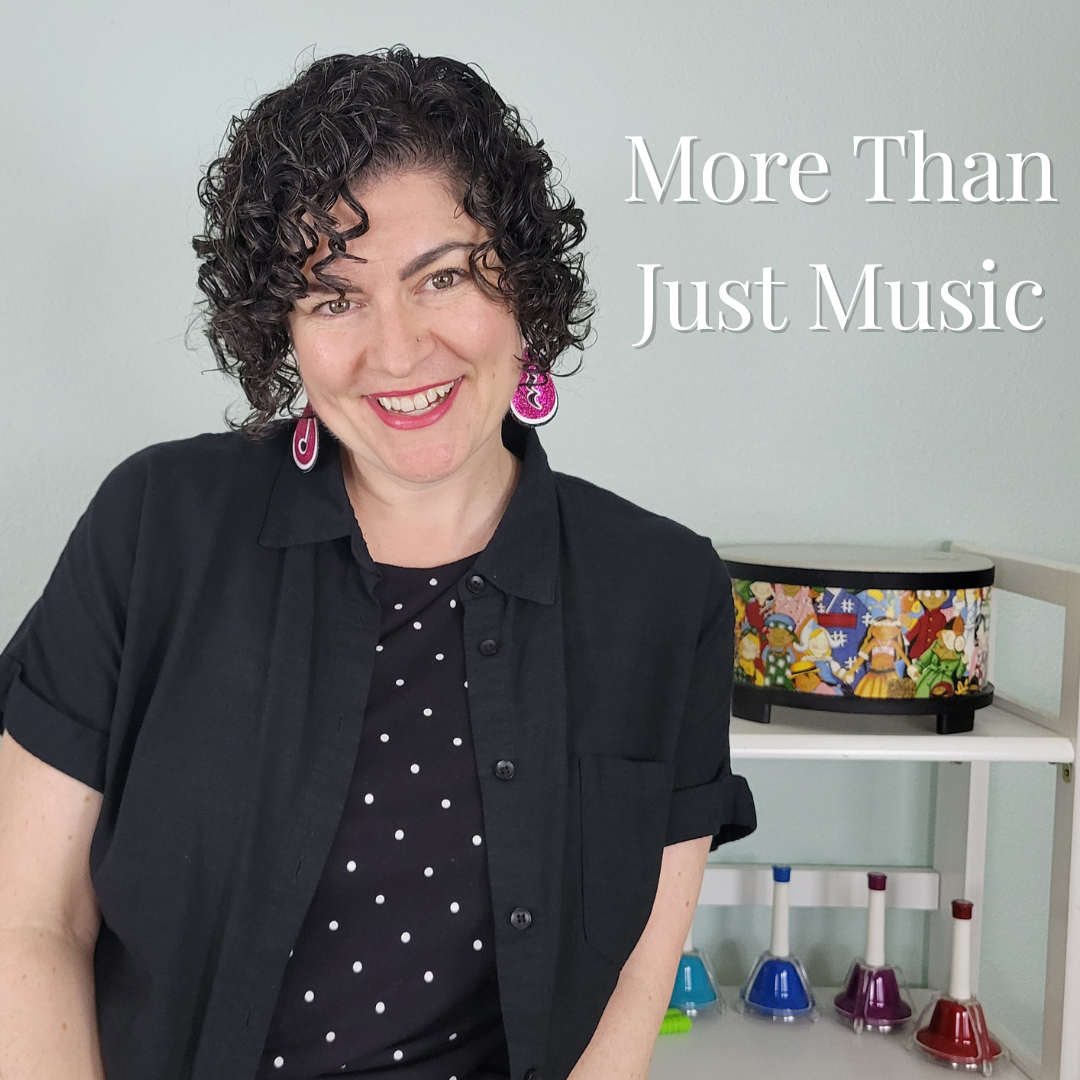
Jenny Martin, M.Ed. is the founder of Little Kiddos Music Academy® and has been developing early childhood music curriculum for over 25 years. Her preschool music curriculum – video classes and lesson plans are used in preschools, childcare centers, and early learning programs across the country.