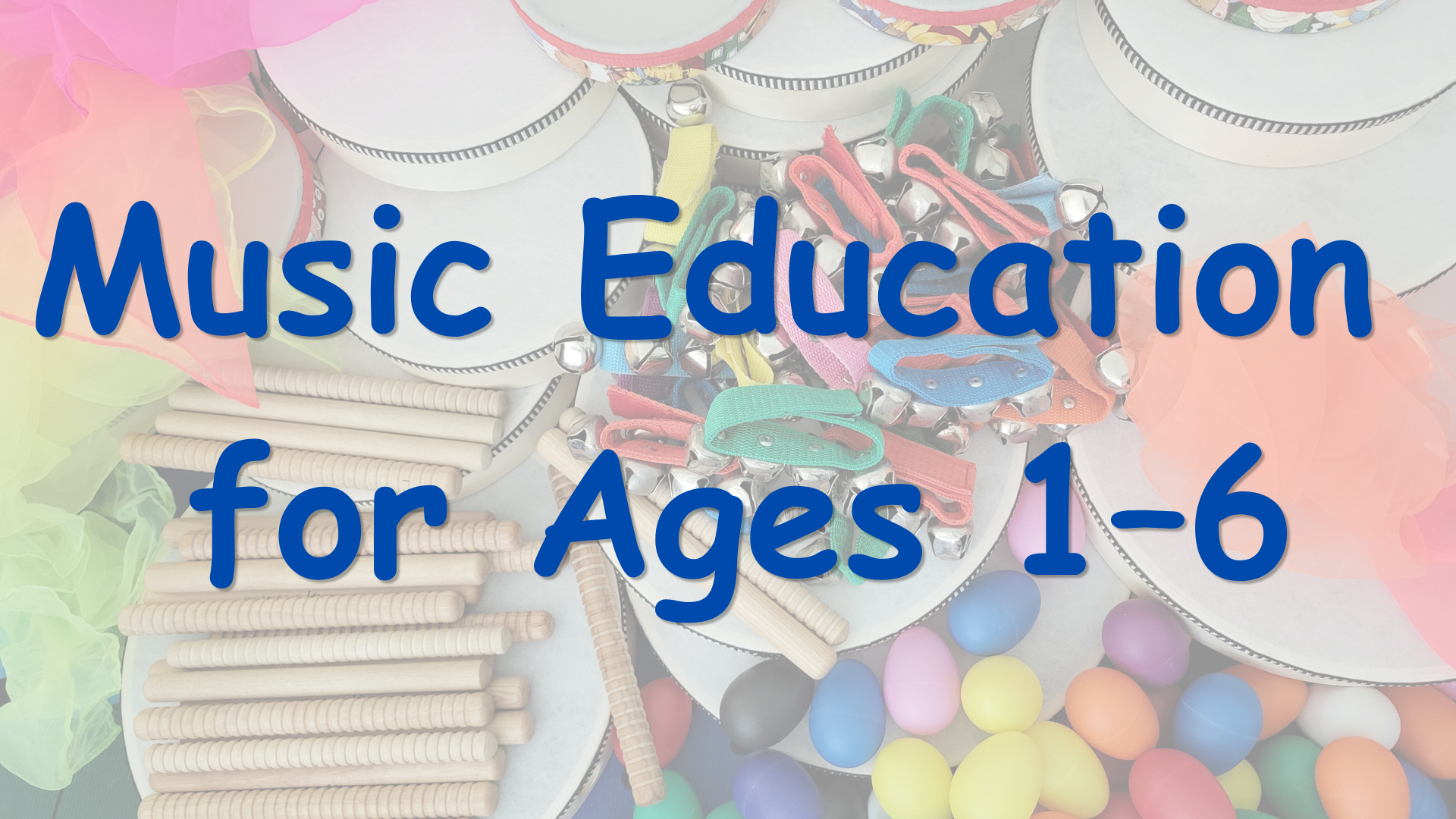
Best Preschool Music Curriculum for Ages 1–6 (and why it works)

If you’re a preschool director Googling “best preschool music curriculum,” I’m guessing you already know just how much music matters — especially in the early years.
You’re not here because someone had to convince you. You’re here because you’re trying to actually do something about it — and figuring out how is the tricky part.
Hiring a music teacher is expensive. Finding one who also understands early childhood development? Really difficult. And those YouTube playlists your teachers are currently using? Entertaining. But that’s not music education. And often those videos are way too stimulating for young learners.
Here’s what I’ve spent 25+ years figuring out: there’s a massive difference between music exposure and music education — and most preschool programs are unknowingly settling for the former. Often for no fault or their own. Finding, scheduling, hiring, paying for a knowledgeable early childhood music teacher can be headache-inducing, for sure.
That’s what Little Kiddos Music Academy® was built to fix.
What the Best Preschool Music Curriculum Actually Does
Research on early childhood music education suggests that meaningful music experiences can support children’s development across multiple areas, including musical skills, language and literacy, listening and attention, motor development, memory, and pattern recognition.
Just a few (of many!) resources for you to check out:
- 2016 USC Study shows music instuction seems to accelerate brain development in young children
- National Library of Medicine Scientific Report shows that music can enhance children’s linguistic skills
- The University of Maryland shares on the importance and some of the benefits of earlychildhood music
- Science Direct shares analysis on the improvements music can provide for fine-motor coordination.
- National Library of Medicine Scientific Report states music and rhythm-based interventions show promise in improving cognitive development.
Let’s be clear about something: a great early childhood music curriculum isn’t just about keeping kids occupied for 25 minutes and maybe having them sing along with some cute songs.
When done correctly, preschool music classes build:
- Musical skills (obviously!)
- Language and early literacy
- Listening and attention
- Coordination and motor planning
- Memory and sequencing
- Early math and pattern recognition
- The foundations for STEM learning
- Social-emotional skills
- Classroom confidence
Research consistently backs this up. Music strengthens the brain pathways involved in auditory processing, working memory, executive functioning, early numeracy, and language development.
Translation: music isn’t a “nice extra.” Music is brain-building.
And that’s exactly what preschool directors and daycare owners increasingly want to see — programs with real developmental outcomes, not just cute performances at the holiday show.
Why Little Kiddos Music Academy® Is Different
Little Kiddos Music Academy® is a low-stimulation, evidence-based preschool music curriculum designed for ages 1–6.
Yes, low stimulation. That’s intentional.
Most music content for young kids is… a lot. Flashing lights, fast cuts, characters yelling at full volume. It’s overwhelming, and it doesn’t tend to teach anything.
Our curriculum goes the opposite direction — focused, calm, interactive lessons that help children actually learn music concepts instead of just reacting to noise.
Every lesson teaches real music vocabulary such as:
- Steady beat
- Tempo (presto / largo)
- Rhythm
- Pitch
- Dynamics (forte / pianissimo)
Children learn through research-informed, developmentally appropriate methods: singing, movement, rhythm instrument play, pitch exploration, musical storytelling, and intentional repetition. In early childhood, repetition isn’t laziness — it’s how the brain builds neural pathways, and little kiddos eat it up!
This curriculum works for preschools, childcare centers, daycares, early learning academies, Pre-K programs, and homeschool co-ops.
“But Can One Music Curriculum Really Work for Ages 1–6?”
Yes! I’m so glad you asked! This is actually one of my favorite things to explain.
Here’s the key: children at different developmental stages engage with the same lesson differently. A well-designed early childhood music curriculum doesn’t need separate versions for each age. It needs to be layered — so every child gets something meaningful, no matter where they are developmentally.
That idea is at the heart of developmentally appropriate practice (DAP). The National Association for the Education of Young Children (NAEYC) defines developmentally appropriate practice as a strengths-based, play-based approach to joyful, engaged learning that recognizes both what children generally need at different stages and what makes each child unique. Read more about that here: NAEYC – Developmentally Appropriate Practice (DAP) Position Statement.
That’s exactly why I don’t believe in simply shrinking an elementary music curriculum down for preschoolers. The music can be real. The expectations can be high. But the way we teach it has to match the child.
Here’s what that looks like in practice:
Ages 1–2: Sensory Exploration & Foundation Building
At this age, music is entirely physical. Toddlers learn by watching, listening, copying, and feeling rhythm move through their bodies.
They’re developing body awareness, early speech patterns, listening skills, and rhythm awareness — even if they can’t articulate any of it yet. They may not say “steady beat.” But they’re starting to feel it.
Clapping to music. Bouncing to beat. Exploring instruments. Repeated songs and routines. That’s what matters here. The goal isn’t perfection — it’s exposure, engagement, and joyful connection.
One of my favorite moments is seeing the awe in a caregiver’s eyes when their one year-old starts perfectly matching changes in tempo or pitch. Yes, real music learning is happening even with the youngest learners!
Ages 2–3: Participation & Musical Confidence
Around age 2–3, kids become real participants. They start anticipating repeated lyrics, echoing rhythm patterns, joining in with movements, and singing bits of songs.
This is when music becomes a powerful tool for vocabulary growth, turn-taking, impulse control, and gross motor development. They start understanding musical opposites — fast vs. slow, loud vs. quiet, start vs. stop — which are foundational cognitive skills, not just music concepts. And, because music is a language and early childhood is the perfect age for developing language and vocabulary understanding, in the Little Kiddos Music® curricula real music terms are taught and learned successfully. Hearing a two year-old whisper, “Pianissimo…” Well, that’s about one of the cutest things ever!
Ages 3–4: Pattern Recognition & Skill Development
This is a sweet spot.
Children ages 3–4 can start recognizing and predicting patterns, which means they’re ready for more intentional music instruction. Rhythm patterns, beat matching, tempo changes, pitch direction, musical sequencing — all of it becomes even more accessible.
It’s also one of the reasons music and early STEM skills are so closely connected. Pattern recognition, sequencing, counting, memory — music practices all of it.
Ages 4–5: Deeper Understanding & Musical Language
Pre-K learners are capable of so much more than we often give them credit for.
At ages 4–5, children start using musical language intentionally. They can identify rhythm patterns, keep a steadier beat, match pitch more accurately, recognize repeated musical phrases, and follow multi-step directions.
These musical experiences engage skills related to executive function, working memory, auditory discrimination, and cognitive flexibility. These skills transfer directly to kindergarten readiness — which is a goal every preschool director understands.
Ages 5–6: Kindergarten Readiness Through Music
By ages 5–6, children are ready for more complex musical challenges — and they can handle them.
Hearing subtle rhythm differences, singing more accurately in tune, learning the lyrics in full and more quickly, maintaining steady beat independently, connecting sound to visual patterns. But these aren’t just music wins! These musical experiences also engage skills that are relevant to later learning, including listening, syllable awareness, self-regulation, and sustained attention.
The exact things kindergarten teachers are hoping to see walk through their doors. Thank you, preschool music curriculum! (You’re welcome! 😊)
Mixed-Age Classrooms?! Perfection!
Directors often ask, “What if my classrooms have multiple ages? Will this still work?”
It’s actually one of the curriculum’s biggest strengths.
Because the lessons are layered, every child participates at their developmental level — in the same class, at the same time.
A toddler bounces to the beat. A 3-year-old claps the rhythm. A 5-year-old identifies the rhythm pattern. They all do their best singing along at whatever level they’re at. They move. They groove. They learn.
Same lesson. Different developmental outcomes. No one left behind, no one bored.
That makes implementation simple, and it makes the curriculum genuinely flexible for how real preschool programs operate.
No Music Teacher? That’s Kind of the Whole Point!
This might be the biggest reason schools choose Little Kiddos Music Academy®.
Your classroom teachers do not need musical training. They do not need to read music. They do not need to play an instrument.
The program includes expert-led video lessons, printable resources, visual aids, rhythm practice materials, extension activities, and teacher support. Teachers press play, participate alongside students, and reinforce learning.
That’s it.
Every classroom can access structured, expert-designed music education — without the specialist hire, without the specialist budget.
Why Preschool Directors Keep Coming Back
Schools love this curriculum because it checks the boxes that actually matter for directors:
- Easy to implement by any classroom teacher
- Low-stimulation and classroom-friendly
- Evidence-based with real developmental outcomes
- Budget-friendly compared to hiring a specialist
- Flexible for mixed-age classrooms
- Designed specifically for early childhood learning
And honestly? The kids love it. They think they’re just singing and dancing and playing instruments.
They have no idea how hard their brains are working.
The Bottom Line
The best preschool music curriculum doesn’t just teach songs. It builds stronger brains, better listeners, confident learners, future readers, early mathematicians, and creative thinkers.
Music teaches children how to learn. It is a whole brain workout! That’s what makes quality music education in early childhood so important — and so worth getting right.
If you’re a preschool director looking for a music curriculum that works for ages 1–6, fits your classroom reality, and doesn’t require a music degree to deliver — Little Kiddos Music Academy® was built for you.
Because every child deserves meaningful music education. Even in schools without a music teacher.
“As a preschool director of a large early childhood center, I am thrilled that Jenny has developed this curriculum. Our school was so fortunate to have her as our music teacher — most preschools do not offer this vital program. With Little Kiddos Music Academy, now you can.”
– Cynthia Chaney, Preschool Director
Jenny Martin, M.Ed. is the founder of Little Kiddos Music Academy® and has been developing early childhood music curriculum for over 25 years. Her video-based and written curriculum programs are used in preschools, childcare centers, and early learning programs across the country.